
Antique Engines
Engine History
The Oldest International Harvester Engine: A Rare Piece of Farming History
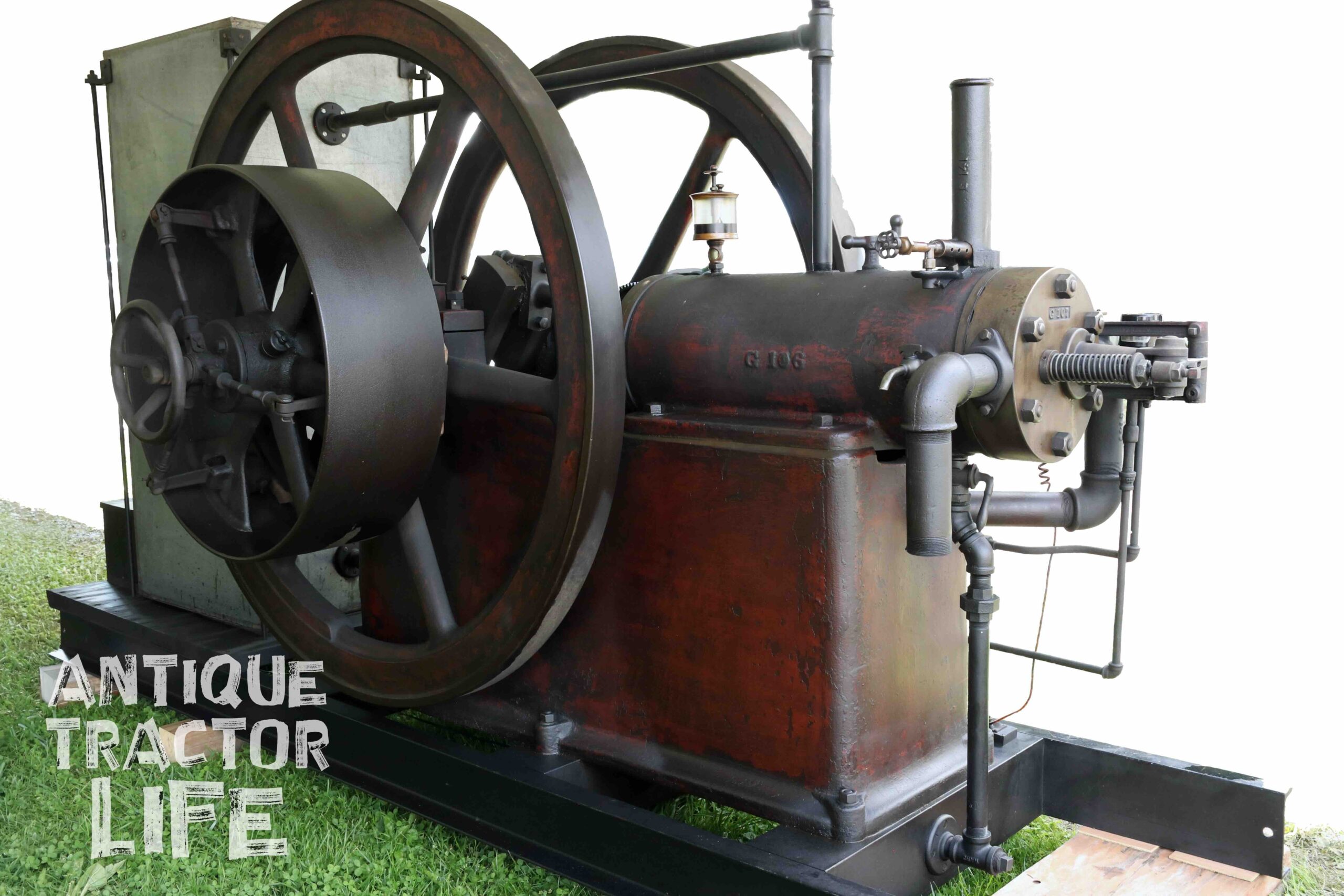
When it comes to early farm machinery, few artifacts carry the weight of history like the oldest known International Harvester engine. On display this year at the Coolspring Power Museum, this remarkable survivor isn’t just another antique—it’s a rare glimpse into the very beginnings of one of the most iconic agricultural companies in the world.
The engine is in extraordinary condition, with nearly 90 percent of its original paint still intact and a beautiful patina that reflects more than a century of preservation. Known as serial number 133, it may have been one of the very first design concepts that Harvester used to begin their engine line. Exact records of these early serial numbers don’t exist, leaving historians and collectors with a fascinating mystery about its true place in Harvester’s timeline.
Unique Features

If you’re familiar with International Harvester’s Famous line of engines, you instantly know this one is special. Several details set it apart from later models, including:
- A machined head
- A forked push rod with a trip in the fork
- Curved flanges on the carburetor and exhaust to accommodate the machined head
- A two-piece carburetor with the fuel bowl as a separate casting
- Gearing located outside the crankcase
- A base design resembling early Fairbanks-Morse engines
These features make the engine a clear link between experimental design and the production models that would follow.
International Harvester’s Beginnings

International Harvester was formed from the merger of several companies, with McCormick and Deering as the two major players. Both had already made their names in the binder industry. Each produced a strong binder, but together they offered the world’s best.
Even before the merger, it’s likely both companies were experimenting with internal combustion engines—either to power their binders or as general-purpose stationary engines.
Harvester Gets Into the Engine Business

The Saint Louis World’s Fair—known as the Louisiana Purchase Exposition—ran from April 30 to December 1, 1904. For any company, it was the perfect opportunity to showcase their finest equipment and introduce groundbreaking new products.
We don’t know for certain whether International Harvester was already developing an engine before the fair or whether the exposition gave them the final push. What we do know is that Harvester announced in a 1903 publication that it would bring engines to the 1904 exposition.
Harvester at the 1904 World’s Fair

International Harvester had the largest individual exhibit in the Palace of Agriculture at the fair. Their display covered more than 16,000 square feet and included grain and grass harvesting machines, seeding machines, earth-stirring tools, gasoline engines, and other implements.
Among the exhibits were two engines: an 8-horsepower stationary engine and a 14-horsepower portable engine.

The Oldest International Engine
The engine showcased at Coolspring is a stationary 1904 model rated at 8 horsepower—the same type Harvester displayed at the World’s Fair. In fact, it’s possible this is the very same engine.
The original owners claimed that a family member purchased the engine in St. Louis, adding weight to the idea that it could be the exposition engine itself.

For nearly 85 years, the engine remained in its original location, where it powered line-shaft equipment. Kept indoors its entire life, it survived in remarkable condition. All of its parts remain original except for the clutch pulley, which was added in 1920 to replace the straight pulley.
In terms of size, the engine more closely matches a later 12-horsepower model from the Famous line. Today, it resides in a private collection but occasionally appears at shows, especially when International Harvester is the featured engine.
Closing Thoughts

Preserving and showcasing engines like this 1904 International Harvester isn’t just about celebrating machinery, it’s about honoring the ingenuity, determination, and agricultural heritage that shaped rural America. Standing before this engine is a reminder of how far farming technology has come and how important it is to protect these artifacts. For anyone who appreciates history, the oldest International Harvester engine is more than iron and street, it’s a living story of innovation, resilience, and progress.


About International Harvester
International Harvester was a prominent American manufacturer of agricultural machinery, construction equipment, trucks, and household appliances. Founded in 1902 through the merger of several companies, including the McCormick Harvesting Machine Company and the Deering Harvester Company, International Harvester played a vital role in shaping the agricultural and industrial landscape of the United States.
The company became known for its innovative farm equipment, such as tractors, combines, and plows, contributing significantly to the mechanization of agriculture. International Harvester also ventured into the production of trucks and construction equipment, solidifying its presence in various sectors.
International Harvester went through significant changes over the years and ultimately evolved into a different entity. In 1985, International Harvester, facing financial difficulties and seeking to focus on its more profitable segments, sold the agricultural and construction equipment divisions to Tenneco Inc. In 1986, International Harvester rebranded the remaining portion of the company, primarily consisting of the truck and engine manufacturing divisions, as Navistar International Corporation.
Navistar continued to be a major player in the production of trucks, buses, and engines, while the agricultural and construction equipment divisions were no longer under the International Harvester umbrella. Over the subsequent years, Navistar faced various challenges, including financial struggles and legal issues related to engine technologies. In the early 2020s, Navistar agreed to be acquired by TRATON SE, a subsidiary of the Volkswagen Group, marking another chapter in the company’s history.


0