
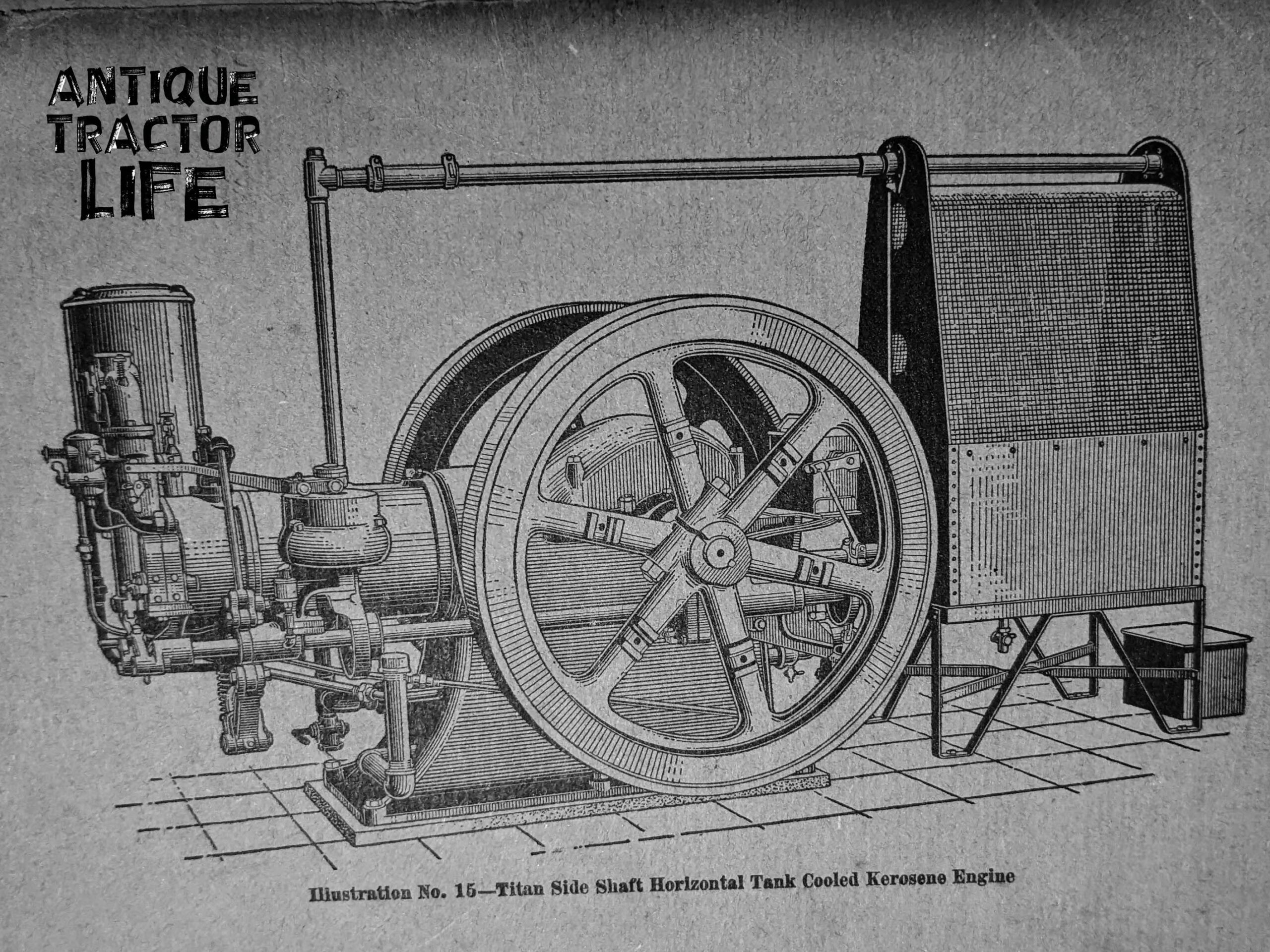
The Titan Side Shaft engine, built by International Harvester between 1916 and 1918, holds a special place in the world of antique engines. Produced in low numbers and mechanically complex, this model is highly prized by collectors today.
Design and Features
The Titan Side Shaft is a horizontal, single-cylinder engine with a distinctive side shaft running along one side of the block. This shaft powered several critical functions, including:
- The mechanical oiler
- The fuel pump
- The governor controls
- The magneto and igniter trip
- The valve timing system
The valves were arranged vertically in the cylinder head — with the intake valve on top and the exhaust valve on the bottom — adding to the engine’s unique but complicated design.
🎥 See one in action here 👇
Why It Failed
While fascinating, the Titan Side Shaft was ultimately too complicated for the market. Built in 4 and 6 horsepower sizes, most were hopper-cooled. Harvester originally intended to produce larger versions, but poor sales and high production costs ended the project early.
Only a small percentage ever left the factory, making them rare survivors today.
Evidence of Larger Plans

Interestingly, International Harvester did explore larger sizes of the Titan Side Shaft. Evidence comes from assembly drawings preserved in the McCormick Collection at the Wisconsin Historical Society. These blueprints confirm that engineering work was underway, even though no larger models ever entered production.
Final Thoughts
The Titan Side Shaft engine represents both innovation and failure in early International Harvester engineering. Its mechanical complexity doomed it as a commercial product, but that same uniqueness makes it one of the most sought-after collector’s pieces today.
For antique engine enthusiasts, owning a Titan Side Shaft is less about practicality and more about preserving a fascinating chapter of IH’s experimental history.
About International Harvester
International Harvester (IH) was one of America’s most influential manufacturers of agricultural machinery, construction equipment, trucks, and even household appliances. The company was formed in 1902 through the merger of several major players, including the McCormick Harvesting Machine Company and the Deering Harvester Company, and quickly became a driving force in the mechanization of American agriculture.
IH earned its reputation with innovative farm equipment — tractors, combines, and plows — that transformed farming across the U.S. and beyond. The company also expanded into the production of trucks and construction machinery, cementing its role in both agriculture and industry.
Over time, International Harvester went through major changes. By the mid-1980s, financial struggles forced the company to restructure. In 1985, IH sold its agricultural and construction equipment divisions to Tenneco Inc. The following year, the remaining business — primarily focused on trucks and engines — was rebranded as Navistar International Corporation.
Navistar continued building trucks, buses, and engines, carrying forward IH’s industrial legacy. However, it faced its own challenges in later decades, including financial difficulties and legal disputes over engine technologies. In the early 2020s, Navistar entered a new chapter when it was acquired by TRATON SE, a subsidiary of the Volkswagen Group.
From its groundbreaking role in early 20th-century farm mechanization to its later transformation into a global truck manufacturer, International Harvester left a lasting mark on both agriculture and industry.


0